


Published on
A Bahraini medical team has succeeded in recording the first complete human genome sequencing in the Kingdom of Bahrain, achieving a coverage rate of 97%.
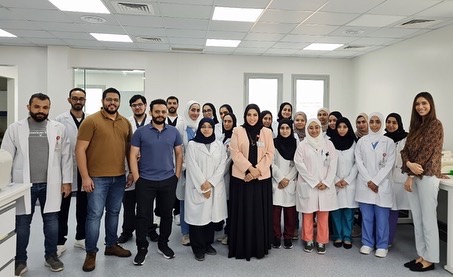
The Bahraini medical team responsible for implementing the National Human Genome Plan at the Public Health Directorate has succeeded in recording the first fully integrated human genome sequencing of its kind in the Kingdom of Bahrain, covering three Bahraini human genome samples with a very high coverage rate of up to 97%. This achievement follows a series of previous successes in monitoring the genetic sequencing of the novel coronavirus (COVID-19) over the past two years, during which the number of samples subjected to full genomic sequencing exceeded 27,000 viral samples.
A team of twenty technicians and specialists in genomic sciences was trained by experts from the global company "Illumina," one of the leading companies in next-generation sequencing (NGS) technologies. The training covered the latest protocols for genetic decoding, which are compared against the reference human genome. This technology identifies the nucleotide sequences in complete or targeted genomes of DNA and RNA, enabling the detection of thousands of diseases and genetic mutations. It involves identifying genetic variants and mutations, linking their phenotypic patterns to genotypes, and classifying these genetic variants according to the standards and guidelines of the American College of Medical Genetics and Genomics (ACMG).
The training also covered preparing reports and sharing them with specialists in medical genetics, using software that harnesses the analytical power of artificial intelligence technology connected to leading search engines such as the ClinVar public archive of the National Center for Biotechnology Information (NCBI), as well as databases such as OMIM (Online Mendelian Inheritance in Man), which works to link the relationship between genetic variation and phenotypic expression.
In addition, the team continues to receive intensive theoretical training in clinical genomic medicine in collaboration with Harvard University, aiming to qualify the team to conduct integrated human genome analysis and gain comprehensive knowledge of everything related to it—starting from the principles of molecular genetics to gene classification, and understanding the diagnosis of hereditary diseases common in the Kingdom of Bahrain, as well as researching treatment and prevention methods.
It is worth noting that the National Genome Center project was launched in implementation of the directives of His Royal Highness Prince Salman bin Hamad Al Khalifa, the Crown Prince and Prime Minister, may God protect him, through the establishment of a specialized center for gene analysis. The National Genome Center seeks to contribute to the use of genetic information for predicting and preventing the most common hereditary diseases in the Kingdom of Bahrain, by using next-generation genome sequencing (NGS) technologies. This technology has revolutionized biological sciences, enabling laboratories to perform numerous applications and study biological systems at a level that was previously unattainable.
The Genome Project aims to collect and analyze 50,000 samples from the Bahraini community, with the goal of creating a comprehensive national database, improving quality, and continuing to adopt modern health technologies that will help with diagnosis and the development of innovative solutions for citizens.